
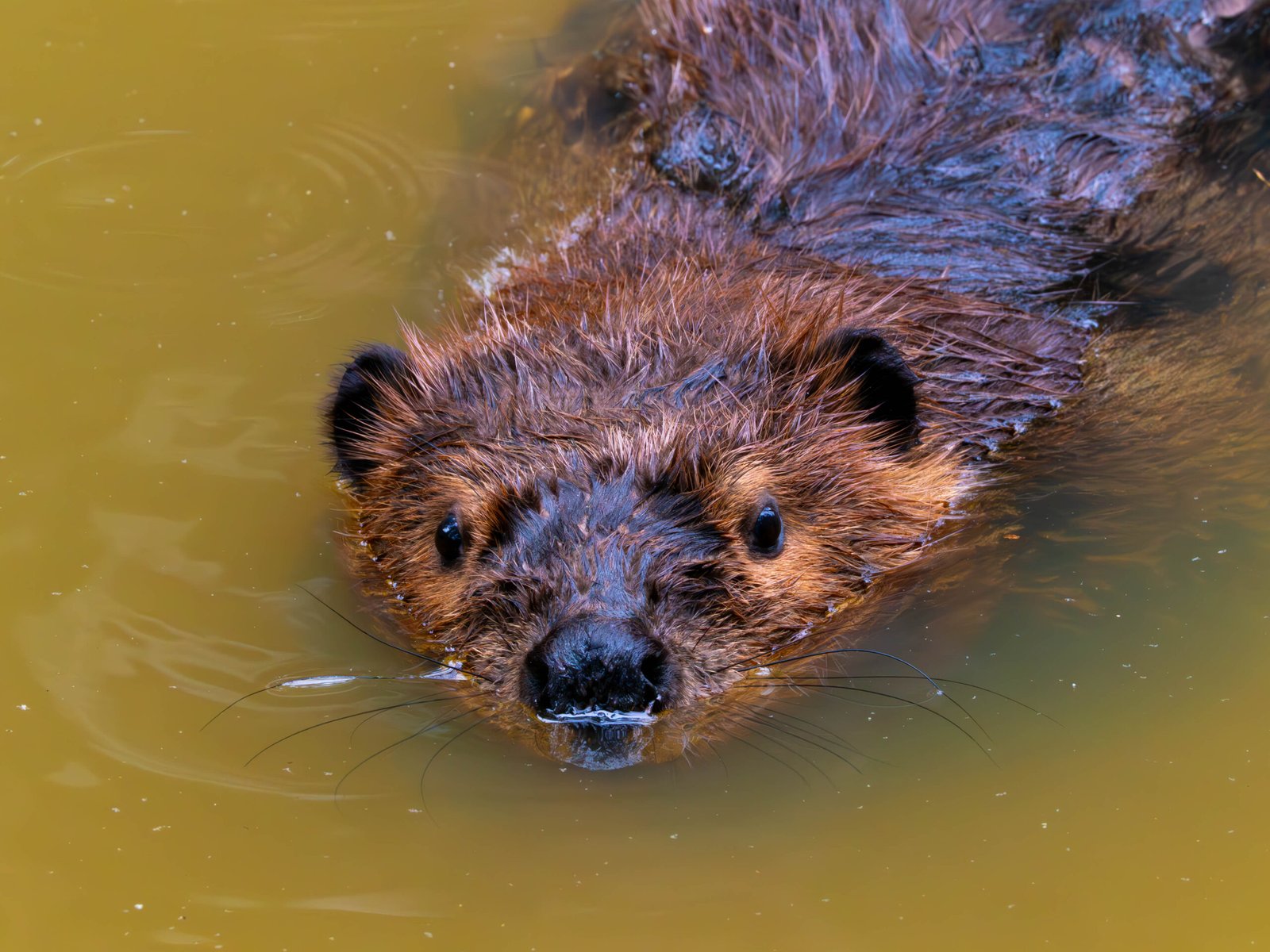
Beavers are remarkable animals, famous for their ability to transform landscapes by building dams and lodges. These structures slow water flow, creating wetlands that provide habitat for countless species—a role that has earned them the title of “ecosystem engineers.” Driven nearly to extinction by the fur trade, beavers were completely absent from North Carolina after 1897 until reintroduction efforts began in the 1930s. Those efforts were extremely successful, and the state is now home to an estimated 500,000 individuals.
Within the last few years, a small contingent of these half-million beavers has settled across a network of ponds and streams along the western side of Rounding Run Rd., and their presence has sparked a wide array of reactions from local stakeholders. The transformation of the landscape has been unmistakable—what were once small creeks between golf course and road causeways are now flooded wetlands where the snags of drowned trees stand in sharp contrast to the surrounding greenery. Suddenly presented with increased risk of property damage due to falling trees, HOA boards with no prior habitat-management experience have been scrambling to find solutions.
On January 30, 2025, a crew hired by the Golf View HOA board began a project to remove the dam on the north side of North Course Dr., draining what they could of the associated beaver pond. Four individuals put in a full day’s effort to dismantle portions of the dam. Crews have returned on at least four other occasions over the past year to continue that work. Despite thousands of dollars’ worth of labor, one would be hard-pressed to notice that any work had been done at all. One need not look far to understand the meaning behind the colloquial expression “busy as a beaver.”
The astute reader may not be surprised to learn that I am a dedicated nature enthusiast. Since January, I’ve been eager to find ways to help manage this emerging issue for the benefit of everyone involved. While I’ve had many conversations with individuals representatives of various Village of Raintree entities, meaningful progress has been slow. Responses have often reflected uncertainty or misinformation, but I remain hopeful that through better communication and shared understanding, we can find solutions that support both our community’s interests and the ecological value the beavers bring. Over this series of blog posts, I’ll aim to provide a comprehensive overview of the situation, clear up common misconceptions, and outline practical ways to encourage coexistence while minimizing human–beaver conflict.