
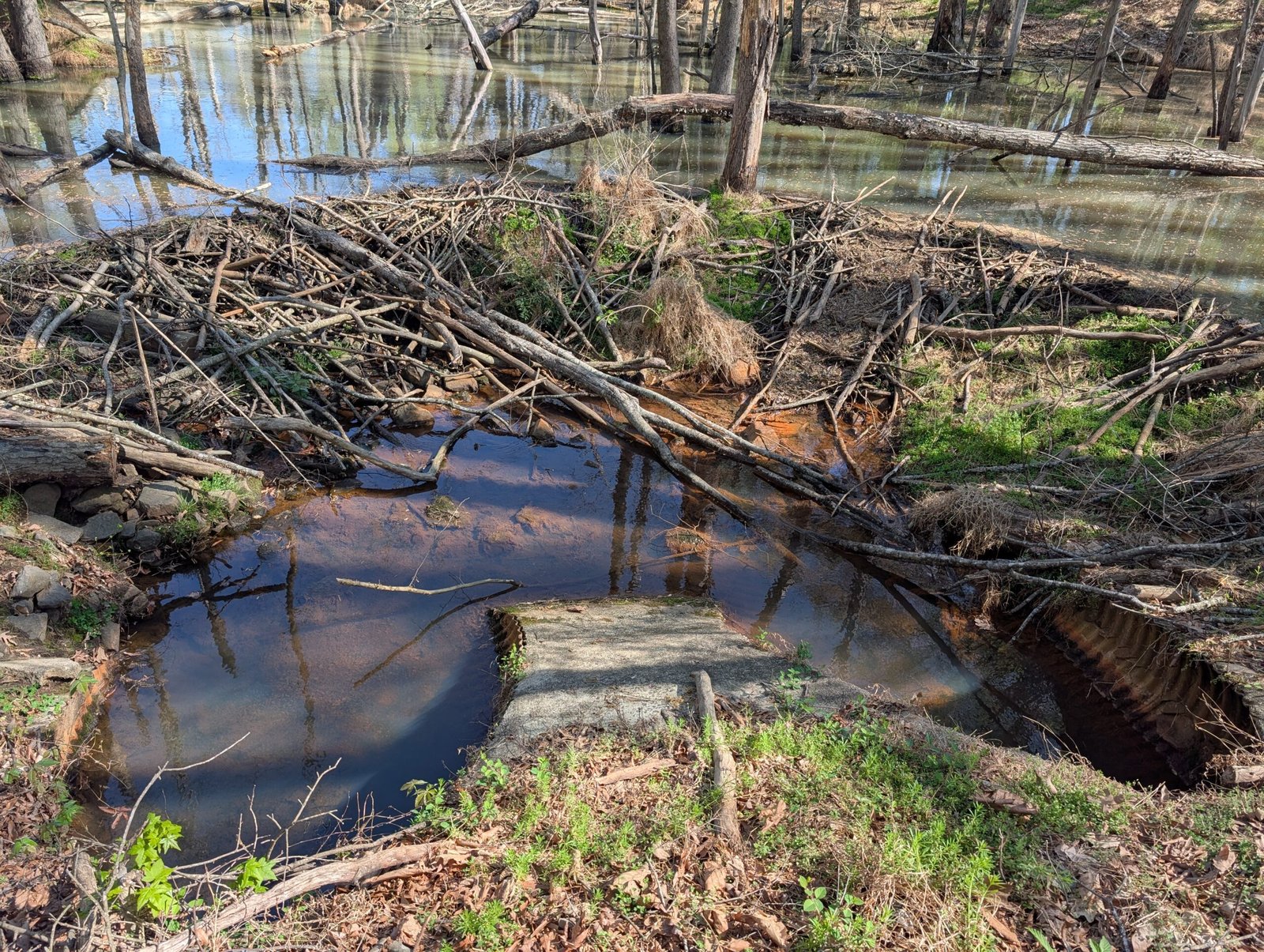
Since beavers first appeared along Rounding Run, their arrival has stirred plenty of conversation—and, in some cases, concern. While many residents appreciate the renewed wildlife and natural beauty they’ve brought to our green spaces, others worry about the practical consequences of living alongside such industrious neighbors. Over the past year, I’ve heard a range of frustrations: dead & dying trees, property risk, road obstructions, mosquitoes, stagnant water, culvert blockage, and flooding.
Some of these are valid concerns while others are merely misconceptions. In this post, I will do my best to summarize each of these frustrations in turn, with more detailed discusions to follow in future installments.
Tree Damage:
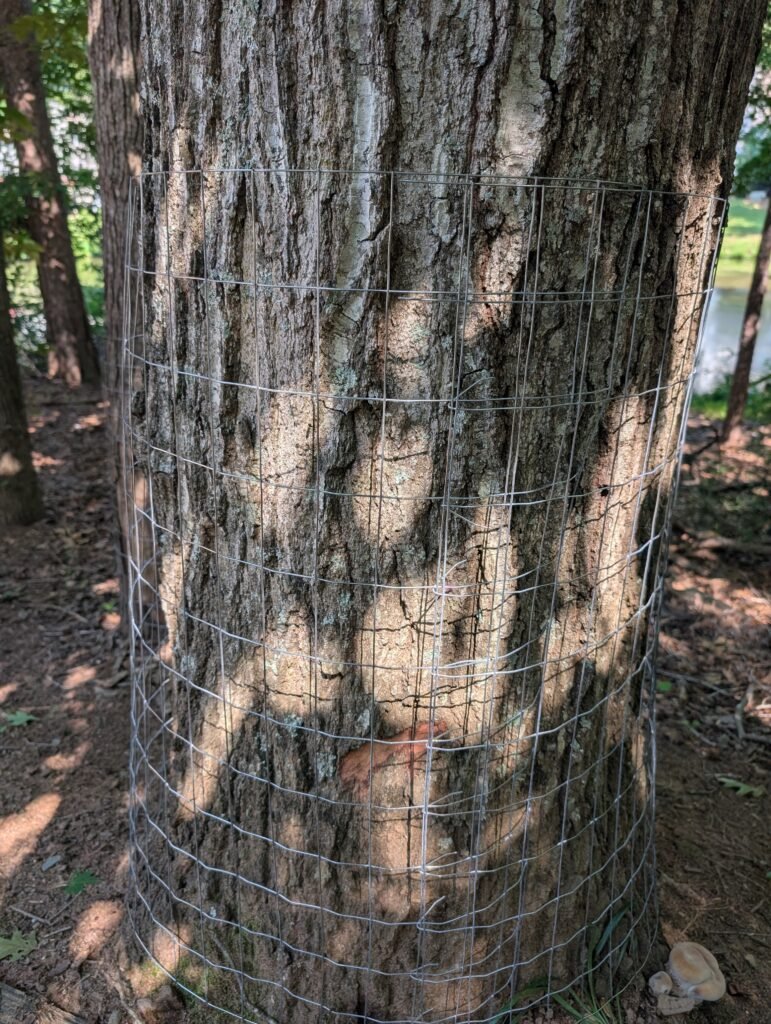
Tree damage is a very real issue and should be considered the primary cause of concern given our situation. The last thing anybody wants is for a tree to fall on someone’s house. Luckily, preventative measures, like wire fencing, are generally 100% effective when installed properly and targetted protection can be applied based on beavers’ well documented preferences for certain species. With protections applied in high impact areas, beavers will shift their activity to areas where their behaviors are more easily tolerated.
Matthew Withrow – 7/4/2025
Dead Trees:
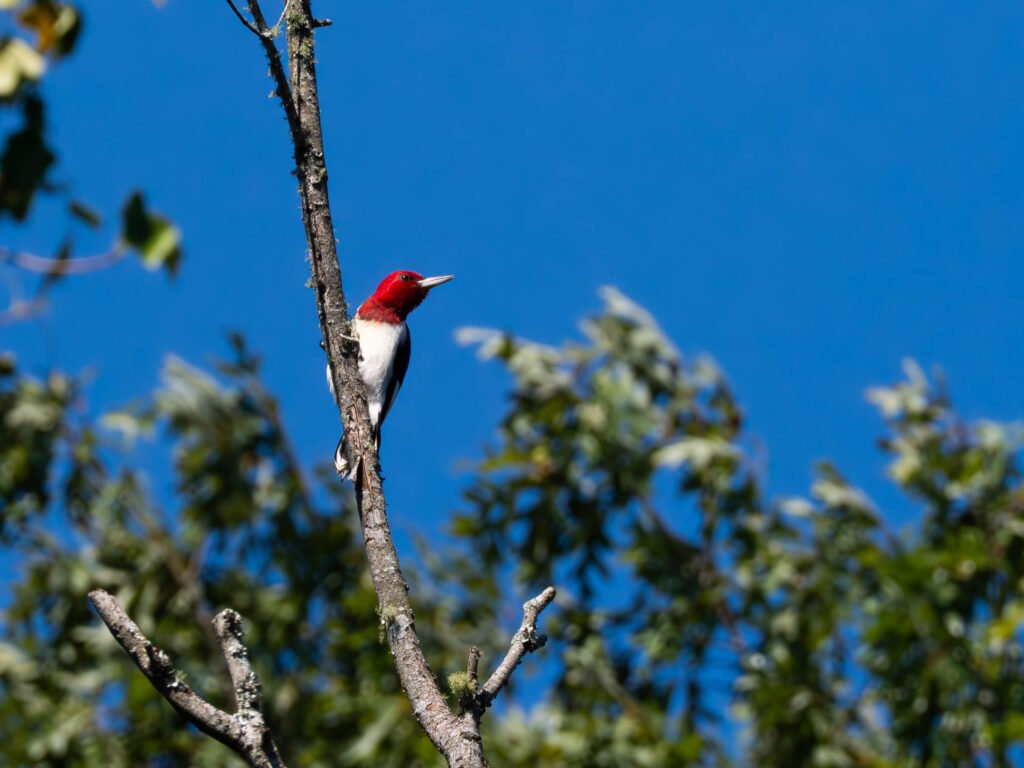
Standing dead trees — while visually striking — represent one of the most ecologically valuable features the beaver pond has created. Dead and dying wood is primary habitat for woodpeckers, which require soft, excavatable snags for nesting and foraging, and they are just one example of the wildlife that has taken up residence in and around the pond. This is not incidental — beaver-created wetlands are recognized as some of the most productive wildlife habitat in the eastern United States precisely because of the diversity of niches they create. While the loss of canopy trees is real and worth addressing, the snags themselves should be understood as a habitat asset rather than simply dead trees. Raintree Revival has volunteered to finance and lead a replanting effort using flood-tolerant species suited to the altered hydrology, which over time will restore canopy while preserving the wetland character that makes this area so productive for wildlife.
Matthew Withrow – 9/13/2025
Mosquitos:
While the beaver pond may seem like an obvious culprit for neighborhood mosquito activity, its role is likely far more limited than assumed. Mosquitoes do breed in shallow, pond margins, but the pond’s established fish population exerts significant predatory pressure on larvae before they can mature — a natural check that keeps emergence numbers well below what unmanaged water sources produce. Roadside drainage infrastructure is a far more productive breeding environment: catch basins and drain pools collect warm, nutrient-rich runoff in shallow, fish-free conditions with little to no water movement. Photographic documentation of standing water at these drain sites points to a persistent breeding source that goes largely unaddressed. A single neglected catch basin can produce thousands of mosquitoes per week, and unlike the pond, these structures have no predator community keeping larval populations in check. Stay tuned for a dedicated post on mosquito control.
Matthew Withrow – 3/27/2026
Flooding:
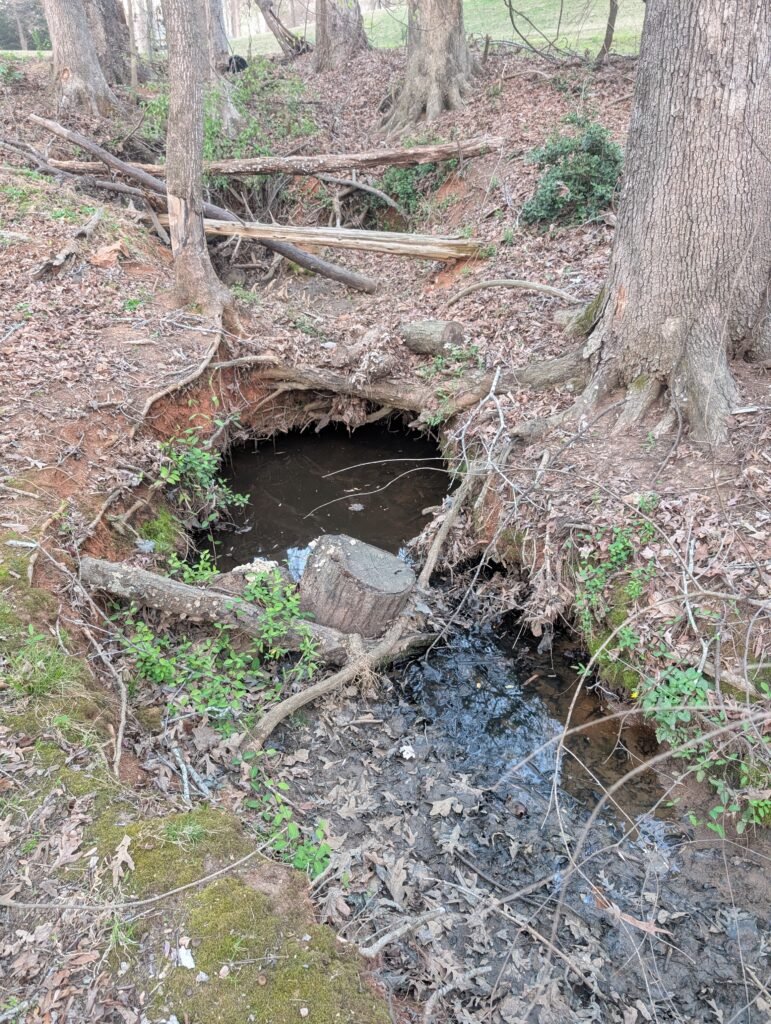
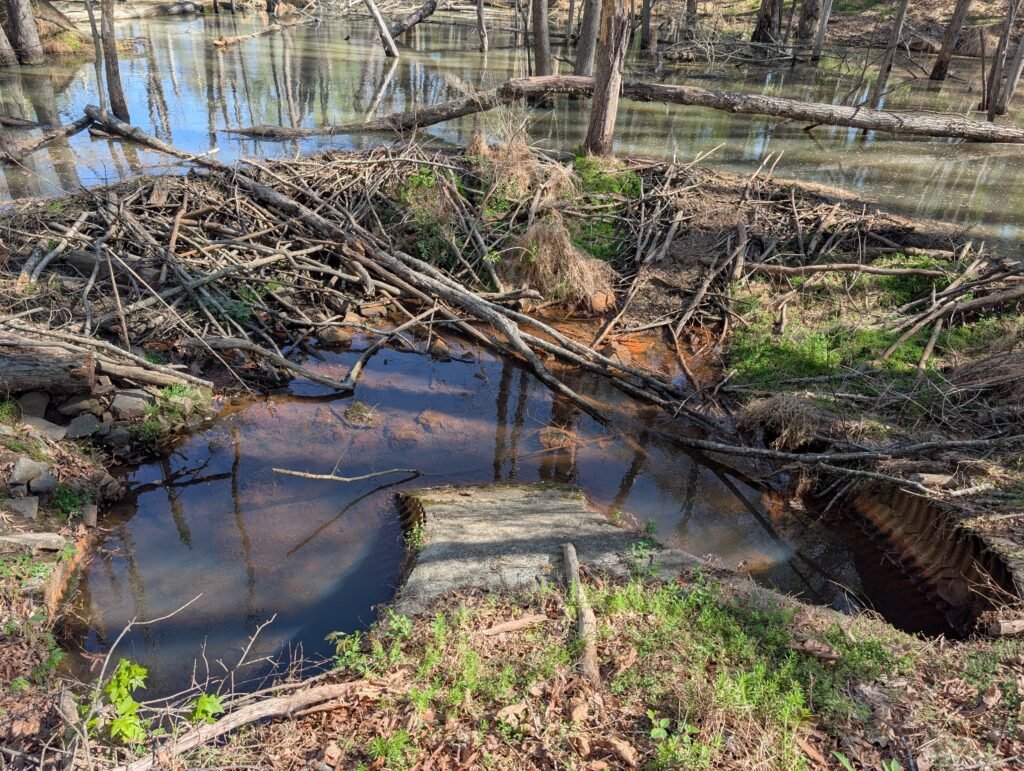
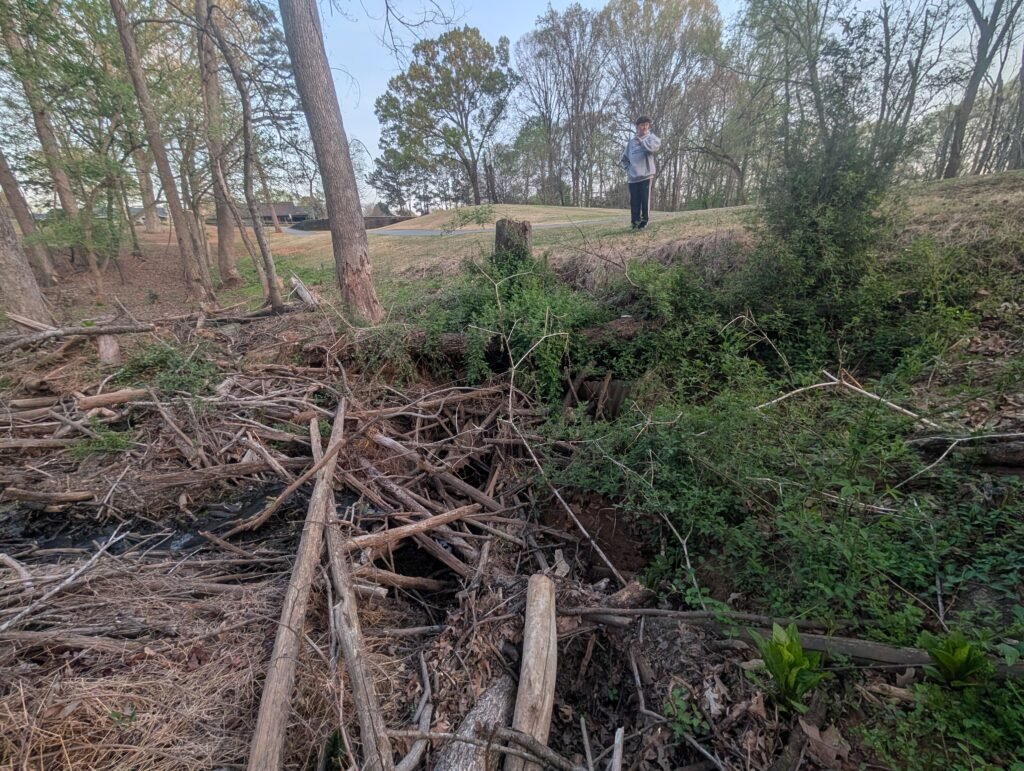
Flooding is another concern sometimes raised in connection with beaver activity, but the neighborhood’s topography makes any risk to homes essentially nonexistent — there is simply no pathway for pond water to reach residential structures. The only realistic flooding scenario involves culvert blockage, which could theoretically cause water to back up and threaten road integrity. This risk is real but easily managed with routine monitoring. The culvert serving this area has been under regular observation (by yours truely) for nearly three years, and in that entire period has required clearing only once — an event likely attributable to storm debris rather than beaver activity. That track record suggests the culvert is not a chronic maintenance burden and that the risk, while worth acknowledging, is well within the range of what attentive neighbors can manage without any intervention targeting the beavers themselves.
Matthew Withrow – 3/28/2026
Matthew Withrow – 3/27/2026
Stagnant & Dirty Water:
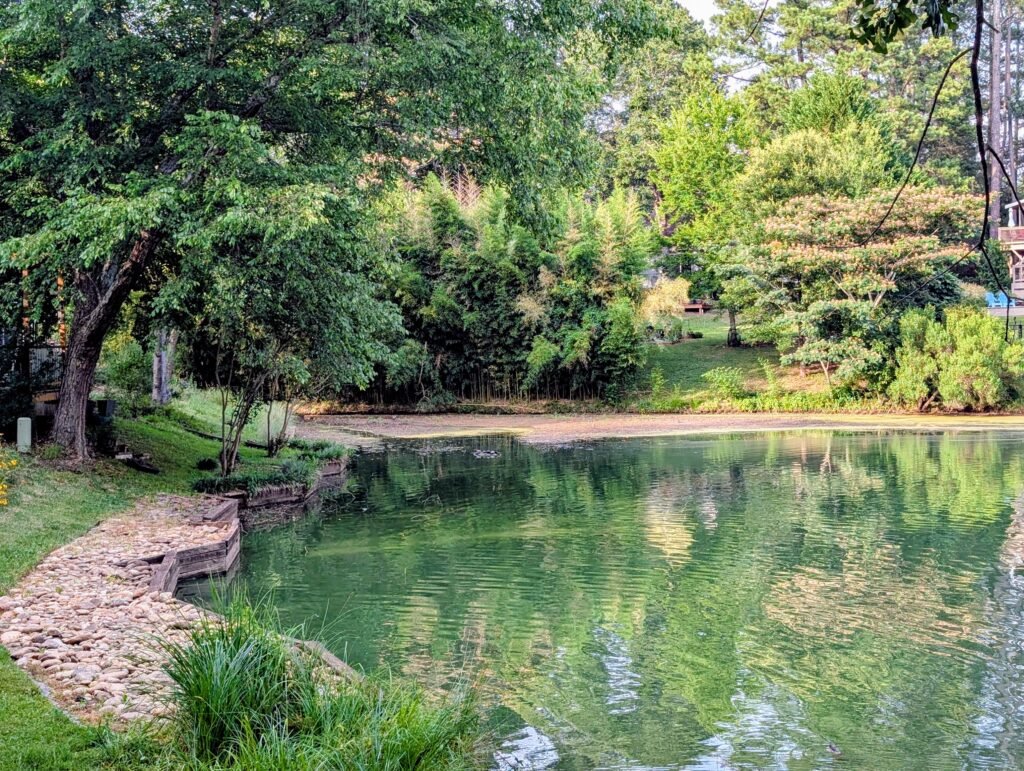
The pond water often appears dark or murky, which may give the impression of stagnation, but this is characteristic of healthy beaver ponds and wetlands generally. The color comes primarily from tannins — natural compounds leached from decomposing leaves and wood — the same chemistry behind many of the region’s native streams and blackwater rivers. It is worth noting that the beaver pond actually has more consistent water movement than the man-made retention pond directly across the road, which relies on a fixed standpipe outlet and only releases water when rainfall raises the level above the pipe intake — meaning it sits essentially static between storm events. The beaver pond, by contrast, has water continuously moving through the dam structure year-round. That flow supports an active aquatic community including fish, amphibians, and invertebrates that would not survive in genuinely stagnant conditions. Furthermore, beaver wetlands are well documented as natural water filters, trapping sediment from upstream runoff before they reach downstream waterways. In this sense the beaver pond is actively protecting the man-made retention pond from accelerated sediment accumulation — a maintenance problem that is neither hypothetical nor cheap, as the upstream pond on Burning Tree Dr. (off Woodfox) is facing just this issue and initial remediation quotes have come in around $400,000.
Matthew Withrow – 6/24/2026